
Back to:
| Ordered alphabetically by REFCODE | Ordered alphabetically by Common name | Ordered by molecular formula | Grouped by family |
P-Xylene
(Last updated December 2025)
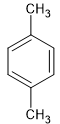
Figure 1. The molecular diagram of P-Xylene.
CSP studies
| REFCODE |
| ||
| Formula | C8 H10 | ||
| Common Name | p-xylene | ||
| IUPAC Systematic Name | 1,4-dimethylbenzene | ||
| Other Names | 4-methyltoluene | ||
| CSD Refcodes | ZZZITY02 | ||
| Search Identifier |
| ||
| Scientist | Joe Ridout | ||
| Date | 2013 | ||
| Publication | No publication planned. | ||
| Energy model |
| ||
| Study_ID | 0 | ||
| Programs | MOLPAK, DMACRYS (2.0.8b4) | ||
| Location on S Drive | CHEMISTRY_CPOSS\JoeRidout\p-xylene | ||
| Potential Description | GDMA2.2(MP2/6-31G(d,p)) + FIT | ||
| Intramolecular Description | MP2/6-31G(d,p) | ||
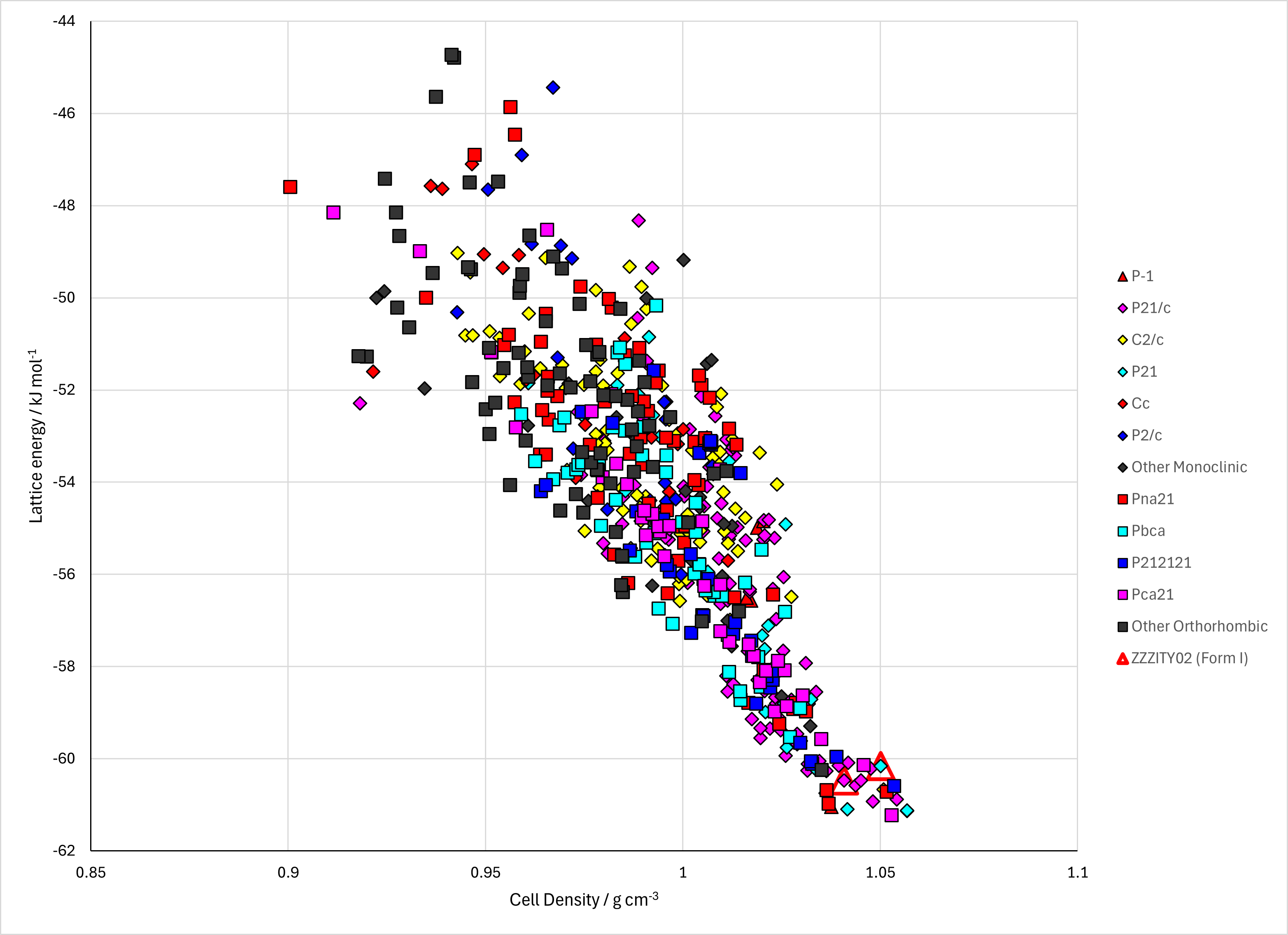
Figure 2. Lattice Energy Landscape of P-Xylene. Energy model A1.
CSD structures (CSD version 6.01)
Table 1. Crystallographic information and experimental information of CSD entries for P-Xylene. Different polymorphs, as ascertained by structure matching of 20 molecule coordination sphere in Mercury, are coloured differently. Reference polymorphs are outlined in bold.
| REFCODE | Spacegroup | Z' | a / Å | b / Å | c / Å | α / ° | β / ° | γ / ° | density / g cm-3 | Form | R factor | T / K | Year | Comment / reference | REFCODE |
|---|---|---|---|---|---|---|---|---|---|---|---|---|---|---|---|
| ZZZITY | P21/m | 1.0 | 11.11 | 8.45 | 7.56000 | 90.0 | 98.95 | 90.0 | 0.0 | None | None | None | 1960 | None | ZZZITY |
| ZZZITY01 | P21/n | 0.5 | 5.806 | 5.023 | 11.215 | 90.0 | 100.48 | 90.0 | 1.0962 | None | 4.5 | at 180 K | 1986 | 10.1107/S0108768186097847 | ZZZITY01 |
| ZZZITY02 | P21/n | 0.5 | 5.73367 | 4.94847 | 11.1384 | 90.0 | 100.71300 | 90.0 | 1.1354 | None | 3.0 | at 4.5K | 2000 | 10.1016/S0022-2860(99)00448-2 | ZZZITY02 |
| ZZZITY03 | P21/n | 0.5 | 5.62290 | 4.93139 | 10.8388 | 90.0 | 100.375 | 90.0 | 1.1926 | None | 3.98 | 293 K | 2022 | 10.1021/acs.cgd.2c00249 | ZZZITY03 |
| ZZZITY04 | P21/n | 0.5 | 5.57 | 4.89201 | 10.7308 | 90.0 | 100.373 | 90.0 | 1.2258 | None | 5.29 | 293 K | 2022 | 10.1021/acs.cgd.2c00249 | ZZZITY04 |
| ZZZITY05 | P21/n | 0.5 | 5.56760 | 4.88918 | 10.7201 | 90.0 | 100.369 | 90.0 | 1.2283 | None | 5.26 | 293 K | 2022 | 10.1021/acs.cgd.2c00249 | ZZZITY05 |
| ZZZITY06 | P21/n | 0.5 | 5.5 | 4.83970 | 10.5784 | 90.0 | 100.393 | 90.0 | 1.2730 | None | 5.44 | 293 K | 2022 | 10.1021/acs.cgd.2c00249 | ZZZITY06 |
| ZZZITY07 | P21/n | 0.5 | 5.46550 | 4.815 | 10.505 | 90.0 | 100.392 | 90.0 | 1.2966 | None | 5.58 | 293 K | 2022 | 10.1021/acs.cgd.2c00249 | ZZZITY07 |
| ZZZITY08 | P21/n | 0.5 | 5.4398 | 4.79510 | 10.4481 | 90.0 | 100.398 | 90.0 | 1.3153 | None | 5.58 | 293 K | 2022 | 10.1021/acs.cgd.2c00249 | ZZZITY08 |
| ZZZITY09 | P21/n | 0.5 | 5.41590 | 4.77870 | 10.4003 | 90.0 | 100.39 | 90.0 | 1.3317 | None | 5.8 | 293 K | 2022 | 10.1021/acs.cgd.2c00249 | ZZZITY09 |
| ZZZITY10 | P21/n | 0.5 | 5.3916 | 4.7636 | 10.3503 | 90.0 | 100.367 | 90.0 | 1.3483 | None | 5.97 | 293 K | 2022 | 10.1021/acs.cgd.2c00249 | ZZZITY10 |
| ZZZITY11 | P21/n | 0.5 | 5.384 | 4.7556 | 10.326 | 90.0 | 100.376 | 90.0 | 1.3557 | None | 6.09 | 293 K | 2022 | 10.1021/acs.cgd.2c00249 | ZZZITY11 |
| ZZZITY12 | P21/n | 0.5 | 5.6517 | 4.9382 | 10.867 | 90.0 | 100.436 | 90.0 | 1.1820 | None | 5.79 | 289.6 K | 2022 | 10.1021/acs.cgd.2c00249 | ZZZITY12 |
CSD determinations were made under pressure. The information is included in the Word Document.
© UCL Chemistry Department 2022. This page was last updated on 30 Sep 2026. If you have any problems with this page please email the WebMaster