
Back to:
| Ordered alphabetically by REFCODE | Ordered alphabetically by Common name | Ordered by molecular formula | Grouped by family |
Chlorothalonil
(Last updated March 2025)
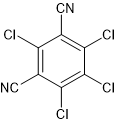
Figure 1. The molecular diagram of Chlorothalonil.
CSP studies
| REFCODE |
| ||
| Formula | C8 N2 Cl4 | ||
| Common Name | Chlorothalonil | ||
| IUPAC Systematic Name | 2,4,5,6-tetrachloro-1,3-dicyanobenzene | ||
| Other Names | tetrachloroisophthalonitrile | ||
| CSD Refcodes | BAWNIW, BAWNIW06, BAWNIW02 | ||
| Search Identifier |
| ||
| Scientist | Helen Tsui | ||
| Date | 2003 | ||
| Publication | Tremayne M, Grice L, Pyatt JC, Seaton CC, Kariuki BM, Tsui HHY, Price SL, Cherryman JC, J Am Chem Soc, 126(22); 7071-7081 (2004) | ||
| Energy model |
| ||
| Study_ID | 0 | ||
| Programs | Molpak, DMAREL (3.02) | ||
| Location on S Drive | \CHEMISTRY_CPOSS\0-EarlySearches\home\louise_price.eminerals\chlorothalonil | ||
| Potential Description | MP2 6-31G(d,p) DMA + specific anisotropic repulsion potential | ||
| Intramolecular Description | SCF 3-1G(d,p) | ||
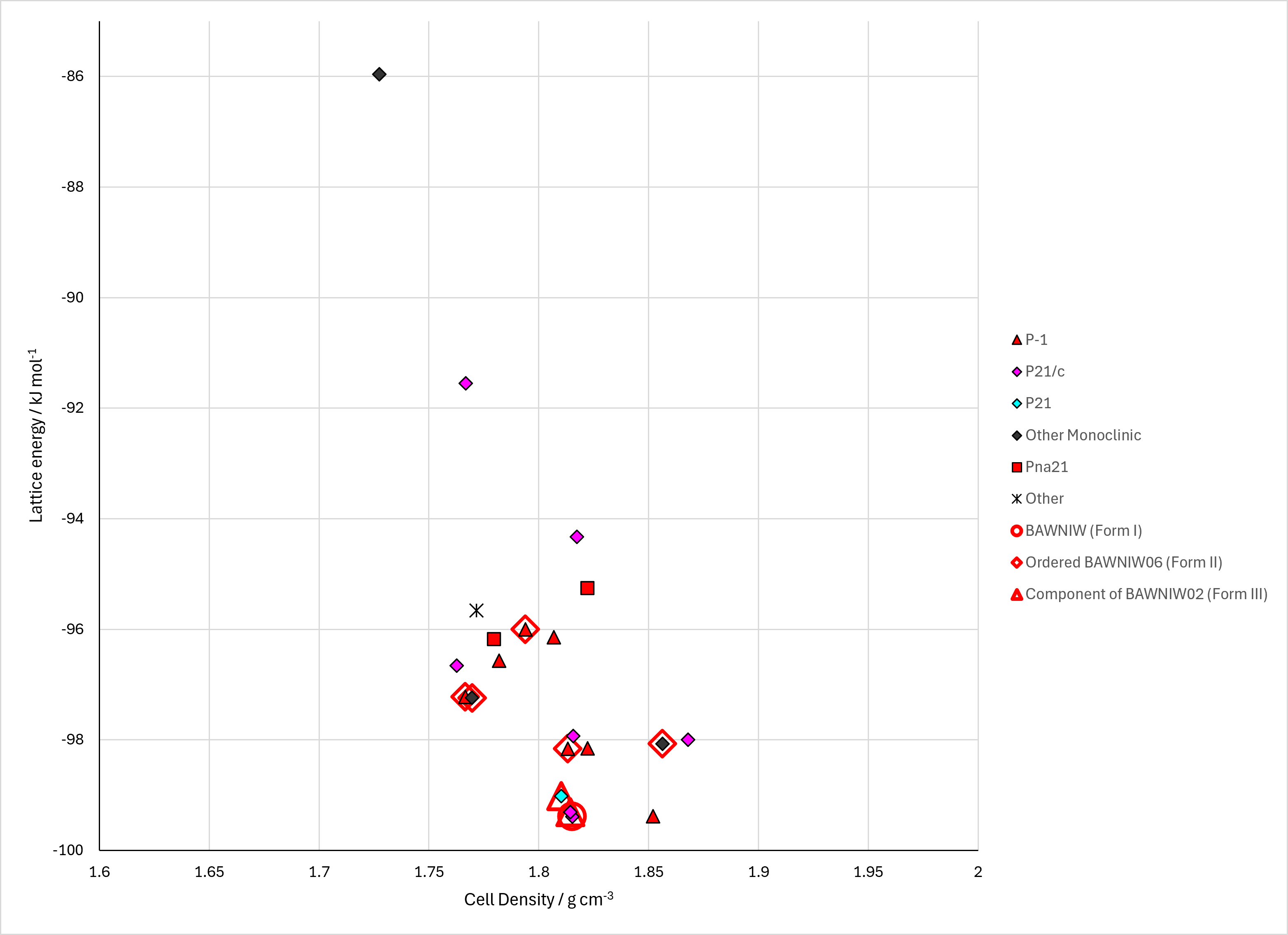
Figure 2. Lattice Energy Landscape of Chlorothalonil. Energy model A1.
CSD structures (CSD version 5.46 with Feb 2025 update)
Table 1. Crystallographic information and experimental information of CSD entries for Chlorothalonil. Different polymorphs, as ascertained by structure matching of 20 molecule coordination sphere in Mercury, are coloured differently. Reference polymorphs are outlined in bold.
| REFCODE | Spacegroup | Z' | a / Å | b / Å | c / Å | α / ° | β / ° | γ / ° | density / g cm-3 | Form | R factor | T / K | Year | Comment / reference | REFCODE |
|---|---|---|---|---|---|---|---|---|---|---|---|---|---|---|---|
| BAWNIW | P21/a | 1.0 | 24.753 | 6.226 | 6.34 | 90.0 | 95.41 | 90.0 | 1.8157 | P21/a polymorph 1 | 3.300 | None | 1981 | None | BAWNIW |
| BAWNIW01 | R-3m | 0.08 | 9.278 | 9.278 | 10.093 | 90.0 | 90.0 | 119.99999 | 1.7617 | R-3m polymorph 2 | 6.09 | at 296 K | 2004 | 10.1021/ja0498235 | BAWNIW01 |
| BAWNIW02 | P21 | 3.0 | 13.5910 | 6.3033 | 18.4290 | 90.0 | 109.44800 | 90.0 | 1.7796 | P21 polymorph 3 | 6.96 | at 296 K | 2004 | 10.1021/ja0498235 | BAWNIW02 |
| BAWNIW03 | R-3m | 0.08 | 9.2392 | 9.2392 | 10.0969 | 90.0 | 90.0 | 119.99999 | 0.0 | R-3m polymorph | 2.5 | None | 2004 | None | BAWNIW03 |
| BAWNIW04 | P1 | 1.0 | 6.3082 | 6.2995 | 6.3137 | 94.202 | 94.059 | 94.286 | 0.0 | P1 polymorph | 2.4 | None | 2004 | None | BAWNIW04 |
| BAWNIW05 | P21/c | 1.0 | 6.3177 | 6.1897 | 24.523 | 90.0 | 95.902000 | 90.0 | 1.8516 | P21/c polymorph | 4.51 | at 174 K | 2008 | None | BAWNIW05 |
| BAWNIW06 | R-3m | 0.08 | 9.2171 | 9.2171 | 9.935 | 90.0 | 90.0 | 119.99999 | 1.8122 | R-3m polymorph 2 | 3.11 | at 173 K | 2009 | 10.1107/S0108768108035234 | BAWNIW06 |
| BAWNIW07 | P21 | 1.0 | 8.1615 | 9.4191 | 6.4728 | 90.0 | 93.7307 | 90.0 | 1.7785 | polymorph II | 7.13 | None | 2004 | 10.1154/1.1825041 | BAWNIW07 |
| BAWNIW08 | P21 | 1.0 | 8.6003 | 9.2382 | 6.30240 | 90.0 | 96.215200 | 90.0 | 1.7740 | polymorph III | 6.239 | None | 2004 | 10.1154/1.1825041 | BAWNIW08 |
BAWNIW07 and BAWNIW08 are very similar to the R-3m structure, but not the same. Comparisons were done with 20% and 20° tolerances (ignoring smallest components, but allowing molecular differences), and structures with matches better than 0.15 Å considered the same. BAWNIW07 is slightly different.
The Word Document contain some information on crystallization conditions.
Other Notes
The R-3m structure of form II (BAWNIW06) does not show order in the cyano and chloro groups. Many structures matched the arrangement of the rings, with RMSD20 varying between 0.4 and 0.9 Å.
A number of structures matched double or single layers with form III (BAWNIW02). These are marked as components of form III.
© UCL Chemistry Department 2022. This page was last updated on 30 Sep 2026. If you have any problems with this page please email the WebMaster